Σάββατο 31 Οκτωβρίου 2015

Giving you the break you never had (or “When Alex Cross came across the Golem and the Pygmalion Effects”)

   What might you be thinking about yourself when your father has abandoned your mother, the last one is a drug addict who cannot cater even for herself, and you’re only a thirteen-year-old teenage girl? Obviously, things don’t seem shiny to you. It is very probable that you’ll be watching the world through a set of looking glasses shaded with gloom.


   One such girl is Ava in James Patterson’s Alex Cross series. In his novel ‘Cross My Heart’ -which is number 21 of the series by the way- Ava breaks your heart. She’s been helpless throughout the thirteen years of her short life. She’s not capable of opening herself up to receive the love she needs so much. 


   Fortunately, there’s Alex Cross, a detective with the homicide unit in Washington D.C., who’s opened up the doors to his family for her. But no matter how hard he tries to cheer her up, to make her feel she’s capable of anything worthwhile she might think of, they end up in a dead-end. Ava can’t get out of the perilous loop she’s been thrown into in her first thirteen years of her life. The only thing she’s familiar with is rejection, misery and everyone telling or showing her that she’s not capable of anything.


   This is the Golem Effect at its extreme. It’s a psychological phenomenon that you’re already familiar with. You may have witnessed it occurring in classrooms, in the workplace, in your family, probably everywhere human interaction is involved. But what is this Golem Effect? It’s been found that whenever we place lower expectations upon individuals, this has a certain negative effect on their performance as well as how they perceive themselves. It’s all about a negative self-fulfilling prophecy. For example, research did show that employees or students who were treated -arbitrarily- with low expectations did perform worse that those who were in the high-expectancy tier.
   The Golem Effect was named after the golem, a clay creature that was given life with its sole purpose to protect the Jews of Prague, the capital of the current Czech Republic in central Europe. Eventually, it had to be destroyed because it had run out of control.
   The exact opposite of the Golem Effect is the Pygmalion Effect. This is the positive self-fulfilling prophecy and it has been studied more extensively than its negative counterpart. It was named after Pygmalion who -according to the ancient Greek mythology- was a sculptor who fell in love with his statue. His love was so desperate that he asked the gods to give life to her. He saw in a cold, lifeless piece of marble something more, something that could become a true marvel. The gods -Aphrodite in particular- made his wish come true, and one day when Pygmalion returned to his home he stopped in his tracks, his mouth gaping, his breath leaving him for good. All this due to Galatea, the statue that became his wife.  
   But let's go back to Alex Cross' world. Ava and the kids like her, have -more than anyone else- the need for a constant and steady support. They have to be kept close to Pygmalion and as far away as possible from the Golem. And this should probably apply to adults who never had the chance to steer away from the detrimental effects of the Golem when they were young. And why not apply this to a society in general as well? History has taught us that entire nations can do wonders when they’re encouraged to do so and even more so when they're portrayed with a shining light around them.
   So why not give everyone the break they need? Remember to make use of the Pygmalion effect as much as you can and avoid the Golem effect like nothing else. Keep in mind that such kind of behavior is highly contagious, but let's keep this stuff for another article. 
   Had Alex Cross’ stalking psychotic enemy not messed up with his personal life, I’m sure he would have succeeded with Ava one hundred percent.

   P.S.: Remember to check out Chris Dellian's new short story 'The Halo Trap'!

Δευτέρα 5 Οκτωβρίου 2015

Let me tell you a story about the Halo Effects in our lives

Imagine a world without mind fallacies. How would it be? Have you thought about it? A world where kids would be learning at school about the absurd paths our mind sometimes treads on. Luckily, scientists have bunched those behaviors into neatly folded categories, subcategories, sub-subcategories, and stashed them into even more neatly arranged shelves (digital shelves maybe). 


Some of them have made it their life’s purpose to disseminate the -relatively- newly acquired knowledge for the sake of the many. There’s also another set of folks who’ve been trying their best to simplify the jargon and spread the word to everyone who’s there to hear them. 
This shouldn’t be done that way.  
I believe this is a serious task. And it can’t get any more serious. I’m a firm believer of de-formalized formalization of knowledge (by that I mean knowledge that is part of a lesson at school with a more digestible than usual form, like a story, a game, or both).  
I believe that cognitive biases have a place in our society and this place should be the curricula of our schools and not in the lives of people (to the extent this is -humanly- feasible).
A new society will emerge if we manage to educate our children and teach them that their mind is not infallible. That there are plenty of pitfalls to avoid if they don’t want to get bogged down into the gaping holes of irrationality.

And you probably already know that there’s an excellent way to do that, namely, stories. Think only of Aesop’s fables and his animal heroes, and what a great tool they’ve been for thousands of years in the rearing of youngsters. Think about the Bible and the strength and fervor with which its ancient authors infused its pages.


It’s the tales, the parables, the myths, the stories, the fables, the narratives that shape us, shape our society, inform us of who we are. And we should use the same -familiar to all of us- tool if there’s any progress to be made at all. Why not explain to our kids what a cognitive bias is by telling them stories? Simple just like that.   

That’s what ‘The Halo Trap’ is here for.  A short story -or trip if you prefer- into our mind’s recesses. It is the outset of Mr. Tilman’s great vision (a Visio Magna, as he likes to refer to it).


Mr. Tilman, a high school teacher in his forties, single, has always been passionate about his work. It is in the end of the school year that he comes up with a game that he calls ‘the Endgame’. His curiosity to find out how his class of fourteen-year-olds will fare, coupled with his eagerness to not only educate them, but make out of them better human beings, are the backbone of his motivation.
The kids will soon inevitably confront one of their minds’ numerous weak spots, that of the halo effect.
Sooner or later, everyone does. The question is how well we are prepared for this, both as a society and as individuals.
By the way, ‘The Halo Trap’ marks the first steps of ‘Mark in the Failing-Mind Land’ short-story series into a more luminous future, and is coming out in November, 19th. You can preorder at Amazon.com.

Σάββατο 22 Αυγούστου 2015

Women in danger, and what we can do about it

   Time for some fiction from Scandinavia. When I read Camilla Läckberg's “The Lost Boy”, a thread appeared to be running its course throughout the book. It was that of violence against women (its domestic version in particular), a kind of violence that can end up sometimes with the inevitable.


   The story unfolds in Fjällbacka, a quiet town in rural Sweden. The book is part of a series featuring Erica and Patrick, happily married with three children, an author and a homicide investigator respectively. When a murder stirs the calm waters in town, the investigation commences and a curl of interwoven stories disentangles. And it is these stories that portray fear, psychological and physical abuse, lives gone the wrong way, insanity, and ultimately death. The reader becomes witness of a series of crimes that expose a bitter truth: women are in danger and no restraining order or shelter or refuge can really help them out if the abuser is determined to reach to the extremes.
   It is no secret that domestic violence is a widespread reality, and a look into the statistics is the proof:

   1. Every 9 seconds in the US a woman is assaulted or beaten.
   2. Around the world, at least one in every three women has been beaten, coerced into sex or otherwise abused during her lifetime. Most often, the abuser is a member of her own family.
   3. Domestic violence is the leading cause of injury to women—more than car accidents, muggings, and rapes combined.
   4. Studies suggest that up to 10 million children witness some form of domestic violence annually.
   5. Nearly 1 in 5 teenage girls who have been in a relationship said a boyfriend threatened violence or self-harm if presented with a breakup.
   6. Everyday in the US, more than three women are murdered by their husbands or boyfriends.
  7. Ninety-two percent of women surveyed listed reducing domestic violence and sexual assault as their top concern.
   8. Domestic violence victims lose nearly 8 million days of paid work per year in the US alone—the equivalent of 32,000 full-time jobs.
   9. Based on reports from 10 countries, between 55 percent and 95 percent of women who had been physically abused by their partners had never contacted non-governmental organizations, shelters, or the police for help.
  10. The costs of intimate partner violence in the US alone exceed $5.8 billion per year: $4.1 billion are for direct medical and health care services, while productivity losses account for nearly $1.8 billion.
  11. Men who as children witnessed their parents’ domestic violence were twice as likely to abuse their own wives than sons of nonviolent parents.


   Can anything be done at all? The answer is that there is a solution, there always is.   
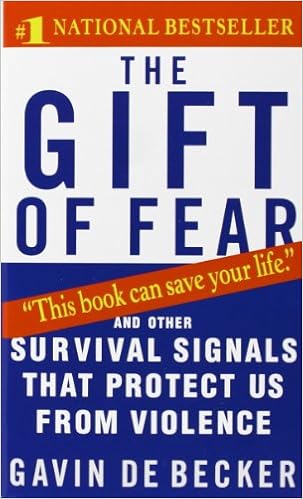
   And it comes from Gavin DeBecker, an expert on the issue of personal safety from violent behavior. In his insightful book “The Gift of Fear” he stresses out that violent acts are not unpredictable. Most important however, Gavin DeBecker is an author who writes out of his vast personal experience and this gives him the ability to reach an unprecedented depth into his writings.


 I’ll provide you here with a list of pre-incident indicators associated with spousal violence and murder, as it appears in Gavin DeBecker’s book. Here it is:

  a. The woman has intuitive feelings that she’s at risk.
  b. At the inception of the relationship, the man accelerated the pace, prematurely placing on the agenda such things as coomitment, living together, and marriage.    
  c. He resolves conflict with intimidation, bullying and violence.
  d. He is verbally abusive
  e. He uses threats and intimidation as instruments of control or abuse. This includes threats to harm physically, to defame, to embarrass, to restrict freedom, to disclose secrets, to cut off support, to abandon, and to commit suicide.
  f. He breaks or strikes things in anger. He uses symbolic violence (tearing a wedding photo, marring a face in a photo, etc.)
  g. He has battered in prior relationships
  h. He uses alcohol or drugs with adverse affects (memory loss, hostility, cruelty).
  i. He becomes jealous of anyone or anything that takes her time away from the relationship; he keeps her on a “tight leash,” requires her to account for her time.
  j. He refuses to accept rejection.
  k. He has inappropriately surveilled or followed his wife/partner.
  l. He believes others are out to get him. He believes those around his wife/partner dislike him and encourage her to leave.
  m. He minimizes incidents of abuse.
  n. He tries to enlist his wife’s friends or relatives in a campaign to keep or recover the relationship.
  o. Weapons are a substantial part of his persona; he has a gun or he talks about, jokes about, reads about, or collects weapons.
  p. He suffers mood swings or is sullen, angry, of depressed.

  To sum up, read Camilla Läckberg’s book for your pleasure, then get a copy of Gavin DeBecker’s book and absorb it for your own safety’s sake. After you’ve done both, think of how we should educate kids (girls and boys) not only on solving math problems, but also on predicting and –of course- avoiding violence altogether.

Πέμπτη 9 Ιουλίου 2015

Closing the circle and the conformity effect (Part 2)

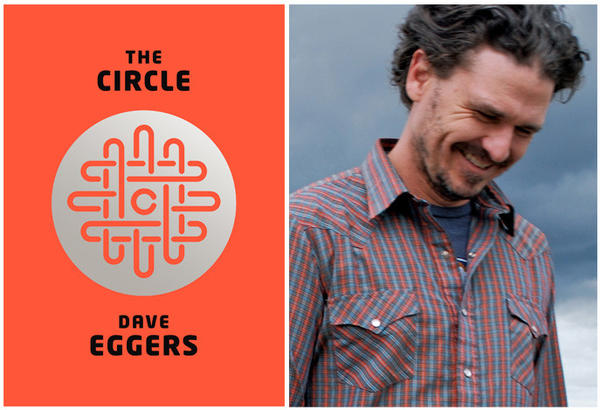
    In Part 1 I brought together Dave Eggers’ ‘The Circle’ and the brilliant study of subliminal influence a set of inanimate watching eyes can have on us.


   ‘The Circle’ was a fun read for me, and it should do the job for you too if you’re drawn into new technology, novel and provocative ideas, and a desire to question the old and critically evaluate the new. A natural outcome was the particular novel to lend itself for further pairing with even more astounding research in the field of psychology.
   A theme that I saw recurring in this book was that of conformity on one hand and that of ‘us-versus-them-who-don’t-get-it’ mentality on the other. The book’s heroine, Mae Holland, experiences a major cognitive dissonance. It stems from her inner conflict between her willingness to be a substantial member of her new company, whereby she acquiesces to every request for access into every conceivable aspect of her personal life, and her inner voice that strives for a few moments of privacy. Her new work becomes gradually the reason for alienation with her parents and her previous life, where no one seems to understand the profundity of the changes that take place in society thanks to the unrelenting efforts of ‘the Circlers’.


   Mae Holland was all too eager to find a solution to her inner conflict -cognitive dissonance is known to be a real nasty trouble when it comes to your everyday peace of mind- and she did it by subduing herself to conformity. She conformed to the superior knowledge and wisdom -they know what the right thing to do is- of the Circle’s three founders.
 
   One psychologist stands out when it comes to studies on conformity, and that is Stanley Milgram.


   In 1961, Milgram sought to explain the reason for the atrocities of WWII. Why did the Germans, a nation considered to be among the developed and literate, lend firm support to a bellicose regime? What was it that drove humans to such an irrational behavior? To what extent would someone be willing to cause harm to his/her fellow?


   Milgram conceived a setting where he would put that to test. He asked his confederates to supervise unsuspecting participants, while the latter would be administering electric current to -yet another- confederate. Don’t freak out -yet-, these shocks were not left without justification. The participants were instructed to ask a set of questions to Milgram’s wired assistant. Whenever the answer was wrong the participant was instructed to turn on the switch. 


   At the beginning, this was the reason for a mild grunt. As the experiment advanced, the questions became tougher and the barely audible grunts turned into screams of despair. The instructions were the same however: ‘Keep going’. A disappointing 65% obliged and continued until the confederate at the receiving end of the cable passed out. This was all feigned of course, the shocks were not the real deal. Nevertheless, the bitter reality was that the participants obliged to such an extent as to harm another -pleading for leniency- human being. The experiment was later replicated in other countries with the same conclusions. For more details you can always watch the following series of videos (of around 15 minutes in total):

  
   Is there any antidote? Conformity to authority has been the glue that kept society and organizations from falling apart. An interminable haggling over what has to be done and how, might not be that productive after all. An unconditioned acceptance of orders can be pernicious as well. There has to be a golden mean, a path somewhere in the middle to walk. And this is a matter of bringing up individuals with the right frame of mind. The question should be reshaped and be: What kind of education do we want? 

Κυριακή 7 Ιουνίου 2015

Closing the Circle and the All-Seeing Eye (Part 1)


Imagine working for a company where the motto is a mix of:
 ‘secrets are lies’, ‘sharing is caring’ and ‘privacy is theft’.

Mae Holland, the protagonist of Dave Eggers’ novel "The Circle" is relieved when she leaves her mundane job at a public utility company and becomes a Circler. 


She finds herself in the most sought-after working environment of the world. A company that caters for its employees like no one else does (and this reminded me so much of Google), with facilities for every imaginable sporting endeavor, parties for any taste, an all-reaching health insurance and lots more. And what does ‘The Circle’ do to make ends meet? Think of them as Facebook, Twitter, Google, etc. combined and one account for everything going on online. And it has to be the real one. No more hiding around.     

And just imagine there’s a micro camera cheap and tiny and robust and efficient enough, that every corner of the world –even the Tahrir Square in Egypt and your front lawn- has one such wedged conveniently for everyone to see … everything.

So, Dave Eggers’ ‘what-if question’ emanates from the pages of his book and is as follows: What if we achieved a state of complete transparency –by means of technology- in every aspect of our lives? (You’ve got to read it to find out…)

It’s an interesting question that I will couple with an equally interesting piece of research.

Have you been into a Christian Orthodox church? If not, here’s a glimpse of what you’ll encounter in the interior.


Lot’s of pairs of eyes looking at you. And what about Uncle Sam? He’s also looking at you with his brows furrowed enough to convey the seriousness of the occasion.


Or consider Turkey, with its longest-lasting personality cult, that of Kemal Ataturk, whose eyes will stare at you from his portraits hanging in the most absurd places.


And then there’s this research of three ingenious British scientists, in the kitchen of a university. The participants of their study had the option to pay for their tea, coffee and milk via a honesty box according to the instructions posted on a cupboard door at eye height. The researchers added one more image below the instructions that alternated each week between a flowery image and an image of a pair of eyes. What they did next was to measure how much the participants had paid each week for their beverage and that’s what they found:


The ‘eyes-weeks’ elicited greater levels of honesty towards the honesty box by the participants. It seems that a set of eyes trained on you has a decisive impact on the subconscious level and results in more honesty and obedience.

I suggest you read Dave Eggers' book if you want to stumble upon more eye-opening ‘what-if-questions’. 

Read more on Part 2.


Παρασκευή 28 Μαρτίου 2014

Time goes by. But how fast?


“I could be off. Time gets distorted when you’re caught up in these things. At the time, everything went by in a blur and that’s why I missed the plate number. I was so astonished at what happened I didn’t register much else.”
  “I know the feeling. On the one hand you’re hyperaware and at the same time you blank out the details.”
  “Amen. I couldn’t for the life of me go back and reconstruct the incident.”
  “Don’t I know,” she said. “A foot chase you swear took fifteen minutes turns out to be half that. Sometimes it works the other way.”


   Kinsey Millhone, a private investigator in Sue Grafton’s ‘V for Vengeance’ has stumbled upon mind jumbling time distortions. And her remarks are correct.  

  In his book, ‘On Combat’, Lt. Col. Dave Grossman, says this actually happens in high-stress situations.


  “A bizarre set of perceptual distortions can occur in combat that alter the way the warrior views the world and perceives reality,” he points out.


   A study based on officers officers who were involved in deadly encounters revealed that the majority of them experienced perceptional distortions like the following:

  -85% Diminished Sound
  -80% Tunnel Vision
  -74% Automatic Pilot
  -72% Heightened Visual Clarity
  -65% Slow Motion Time
  -  7% Temporary Paralysis
  -51% Memory Loss for Parts of the Event
  -47% Memory Loss for Some of Your Actions
  -40% Dissociation (Detachment)
  -26% Intrusive Distracting Thoughts
  -16% Fast Motion Time

 If you want to get yourself as quick as possible out of this jumble of distortions, Dave Grossman has the solution for you: Tactical Breathing. It is a simple and straightforward technique to pull yourself together when in an extreme situation and it’s comprised of 4 steps:
1)   Breathe in from your nose counting to four. Let the air expand your belly.
2)   Hold your breath for the same amount of time.
3)   Let the air out from your mouth counting to four.
4)   Hold empty for the same amount of time.


 And remember to repeat the whole process until you get your pulse down to comfortable levels. 
 Had Kinsey Millhone been aware of this technique, she might have caught sight of the abovementioned plate numbers.  
   

Τετάρτη 12 Φεβρουαρίου 2014

One Girl Gone, and what you should expect from your marriage

  Amy and Nick. Just another couple? I don’t think so. If you get Gillian Flynn's book "Gone Girl" into your hands, just read it. Then you will know what I mean. 


  Gillian Flynn poses a question millions of people ask themselves. Can marriage be a real killer? The only difference is that in the case of Nick and Amy, Gillian Flynn’s protagonists, this isn’t meant only metaphorically.
  After being hit, like so many others, by the financial crisis of 2008, the couple moves out from New York to North Cartage, Missouri, which happens to be Nick’s hometown. Their perfect world, or this was what everyone else thought about them (isn’t it always so, until we learn the truth that lurked behind the hermetically shut doors?), is shuttered one warm summer morning, when Amy is gone missing. Signs of a struggle, an evasive husband and a plethora of clues drive the police closer to Nick.


  There’s yet another question that emerges naturally when you finish ‘Gone Girl’. How well do you know the person you’re married to? And perhaps another one: How well do you know yourself?
  You should not despair. Gillian Flynn (whom I’m wondering why she couldn’t fit somehow into the cinematic rendition of her book, since she’s got the looks, with the shot below being the evidence for that) 


has a remarkable ingenuity in drawing articulate profiles of disturbed characters, more than often to the extreme. Not everyone is like that. The majority, to be precise, is in the boundaries of what we call normal.            
  Fortunately, there’s John Gottman, a professor emeritus of psychology at the University of Washington, renowed for his breakthrough insights on relationships. 


There are thousands of articles and hundreds of books out there on relations. However, Gottman was the first to launch a project in his Family Research Lab, aka ‘Love Lab’, where he observed more than 650 couples over a 14-year span before writing his book ‘The seven principles for making marriage work’. Thus, the advice gleaned from it does not reside on mere generalities but on concrete data collected from filming and recording conversations, arguments, and body language of couples living together.


  So what does professor Gottman have to say? First off, what are the signs that you’re on the bumpy road heading for a divorce (and Gottman’s hit rate for correctly assessing such an outcome is more than 90%)? The kernel of Gottman’s approach is that it is not the argument per se that leads to a divorce, but the way the couples argue. The don’ts list includes:
- Criticism (there’s a difference between a complaint and a personal criticism),  - Contempt (expressed with sneering, eye-rolling, name-calling, mockery and belligerence),
- Defensiveness (‘’it’s not my fault, it’s yours’’),
- Stonewalling (in 85% of marriages the man ‘’tunes out’’ refusing to continue with the argument),
Professor Gottman refers to these first four as the ‘four horsemen of the apocalypse’ (you can imagine how bad they are for a relationship). Next are:
- Flooding (an avalanche of verbal attacks that leads to emotional disengagement)  
- Failure of repair attempts (happy couples have the ability to say ‘Wait, I have to stop here and calm down’, whereas unhappy ones won’t stop a heated argument from escalating) and     
- Harsh startups (‘what begins badly, ends badly’).
  If Amy and Nick had read ‘The seven principles for making marriage work’, or had paid a visit to Gottman’s Institute, life would be easier for them. On the downside, we probably wouldn’t be reading about them.
  All in all, I suggest you read first Gillian Flynn’s ‘Gone Girl’ and then John Gottman’s seven principles book to find out what went wrong with them and get an interesting insight into relationships from both the narratives of a novelist and a psychologist.